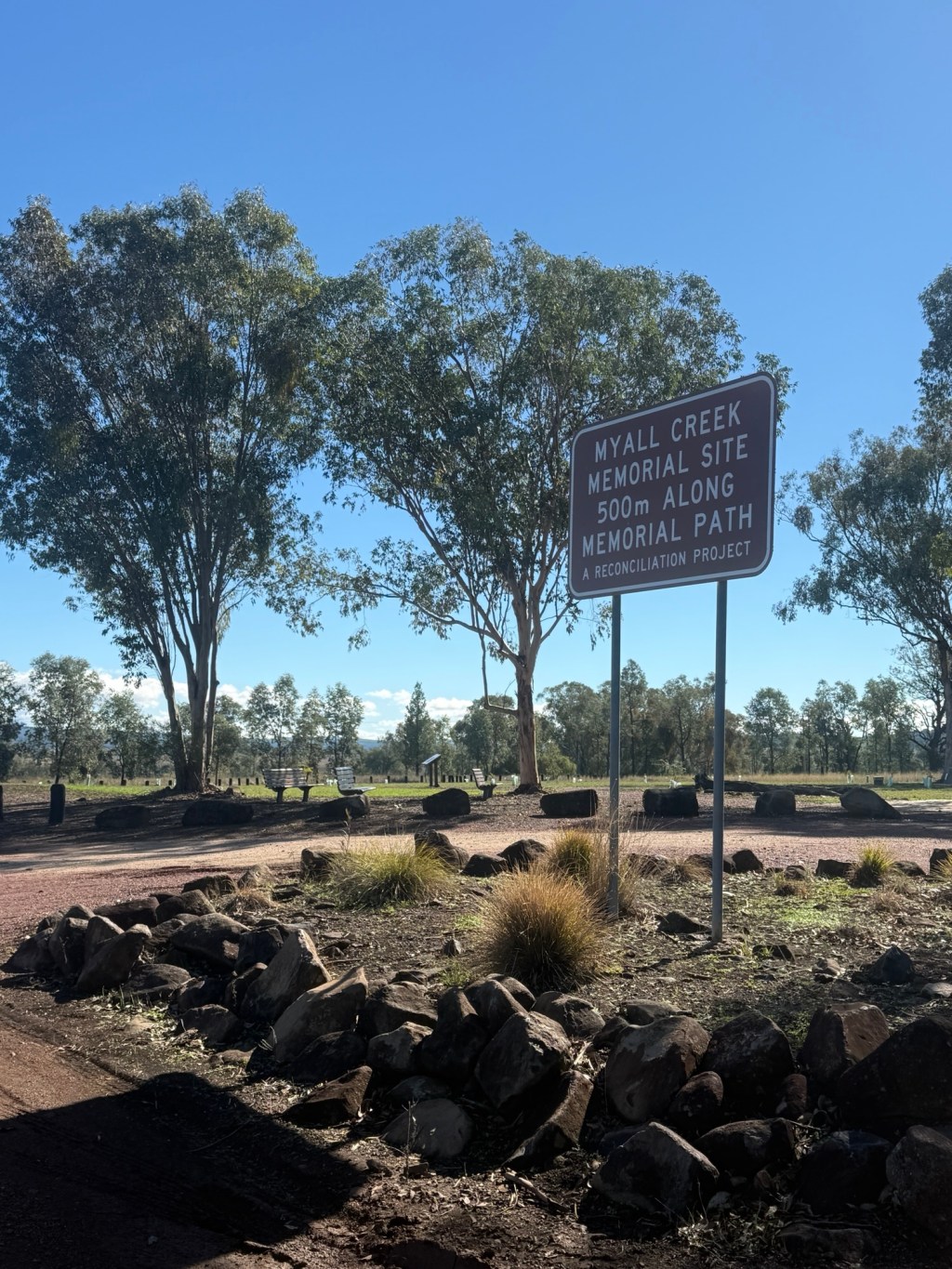
The Myall Creek Memorial was opened in 2000. It is a joint project involving descendants of victims, survivors and people connected to the perpetrators. Annually descendants from both sides gather with an emphasis on remembrance and reconciliation.
It is a surprise that such a nationally significant site is located in a quiet rural area between Delungra and Bingara. Today it is recognised as a National Heritage site because of both the massacre and the reconciliation history that followed.
The site stands out not only for the tragedy itself , but because it became one of the very few massacres where witnesses spoke up, authorities investigated and the courts acted.
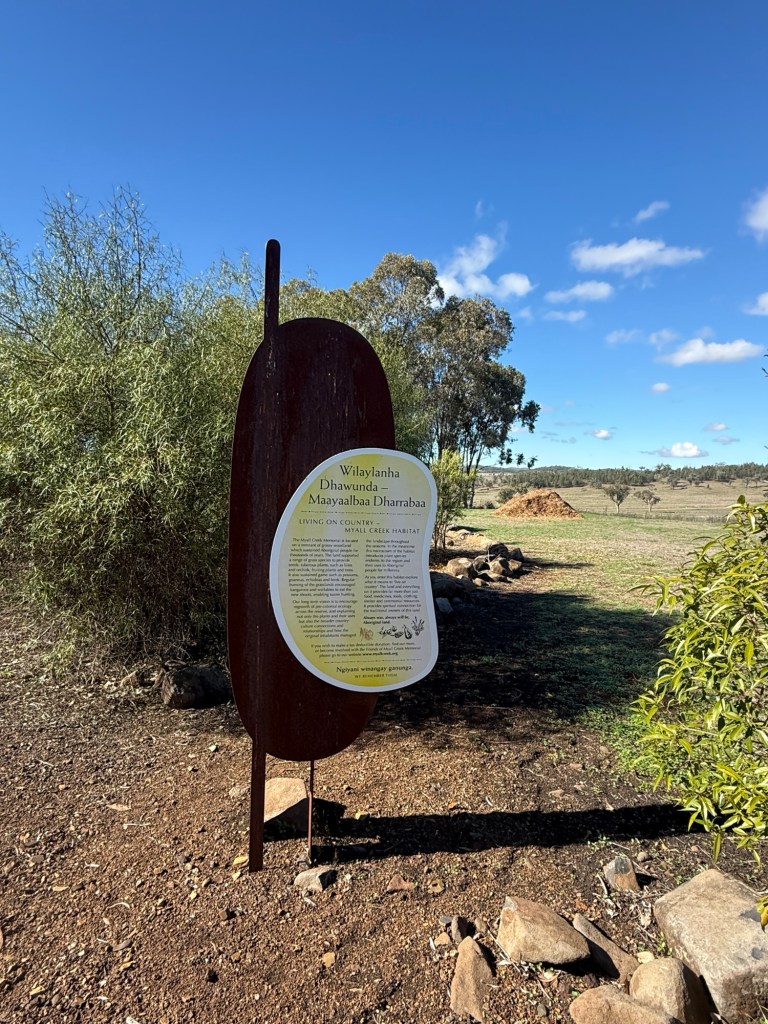
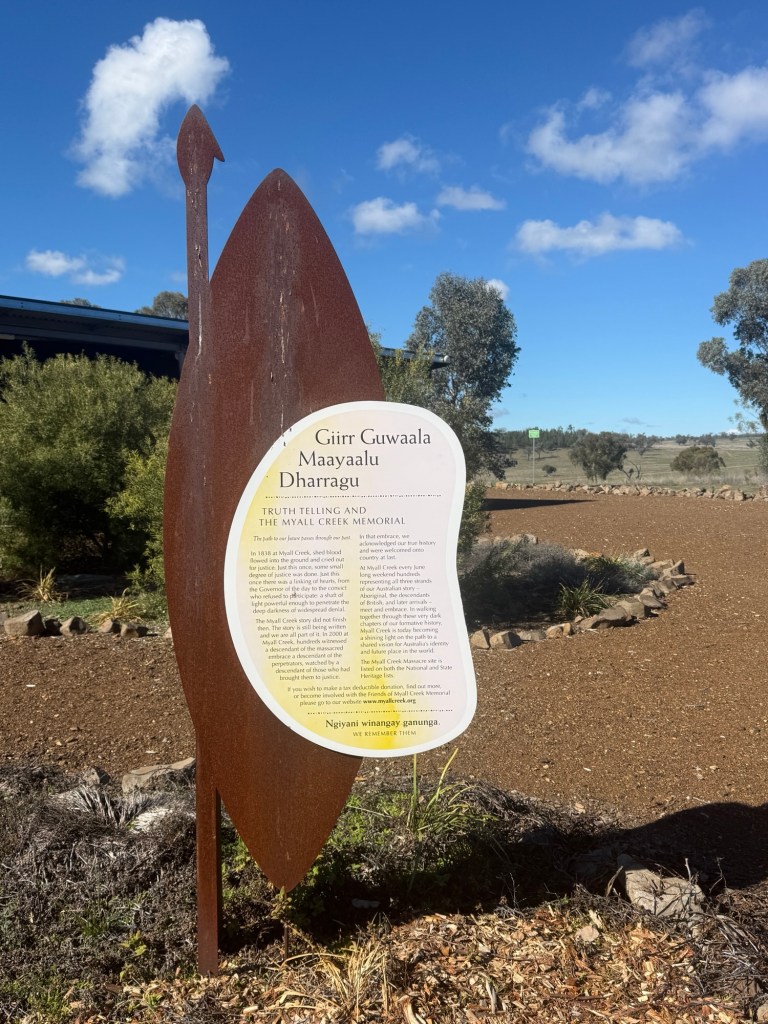
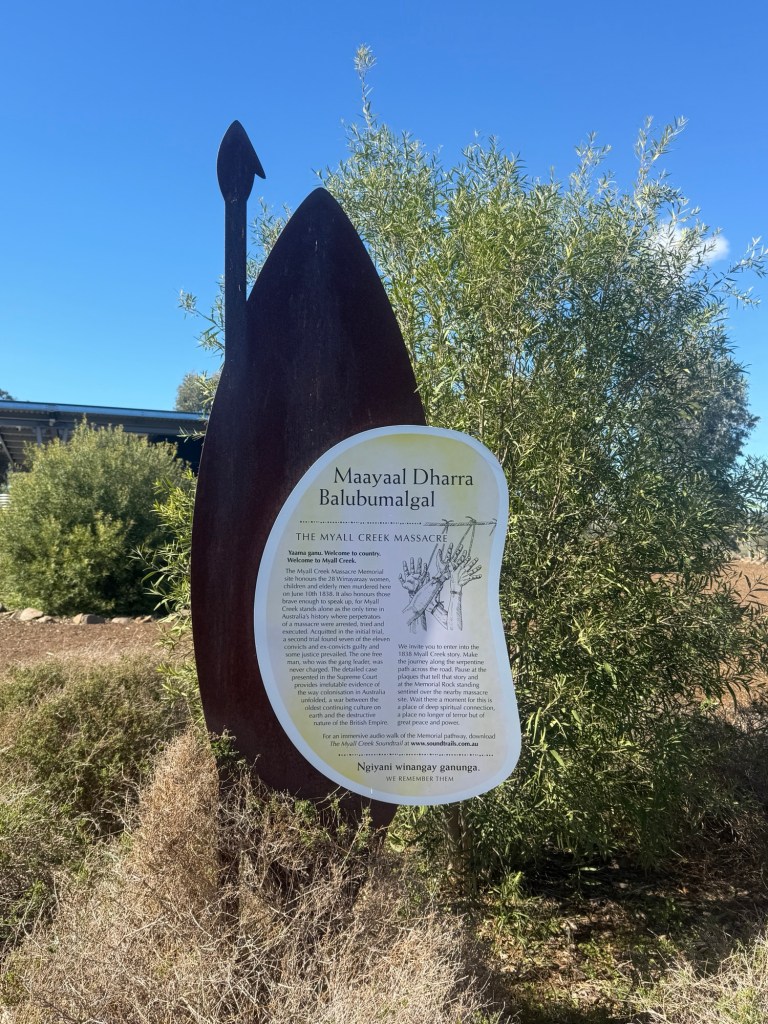
On arrival you are invited to enter into the 1838 Myall Creek story. As you follow the serpentine path and pause and read the plaques that tell the story you can sense a place of deep spritual connection, a place of great peace and power.
I feel a deep sadness about what happened to Aboriginal people and the suffering that these defenceless women children and elderly aboriginal people encountered.
I believe that it is important that these events be remembered and acknowledged. At the same time I sometimes question how governments and society should respond to historical injustices today. While I support recognition, education and respect, I am unsure where the balance lies between acknowledging the past and addressing present day needs for all Australians.
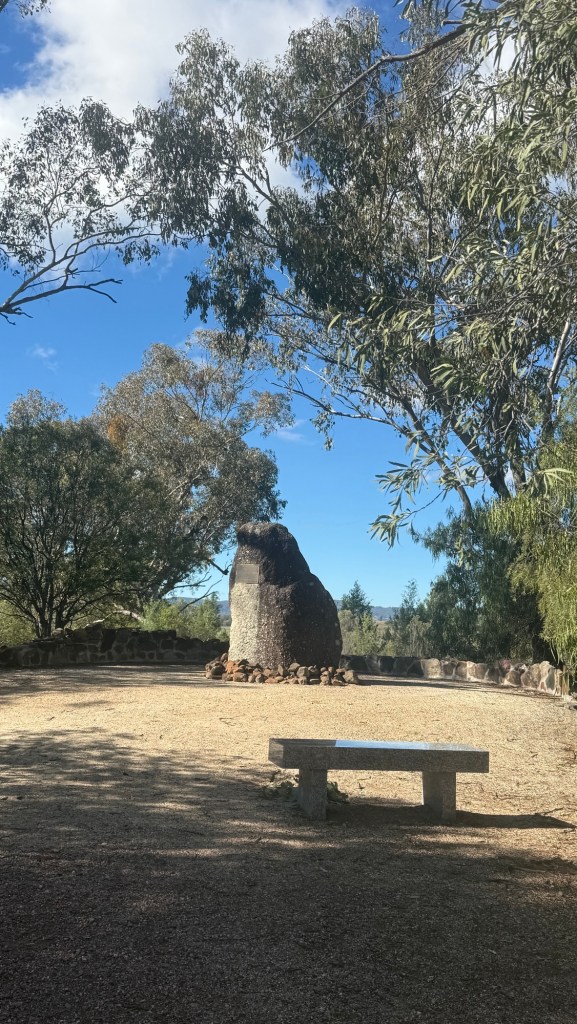
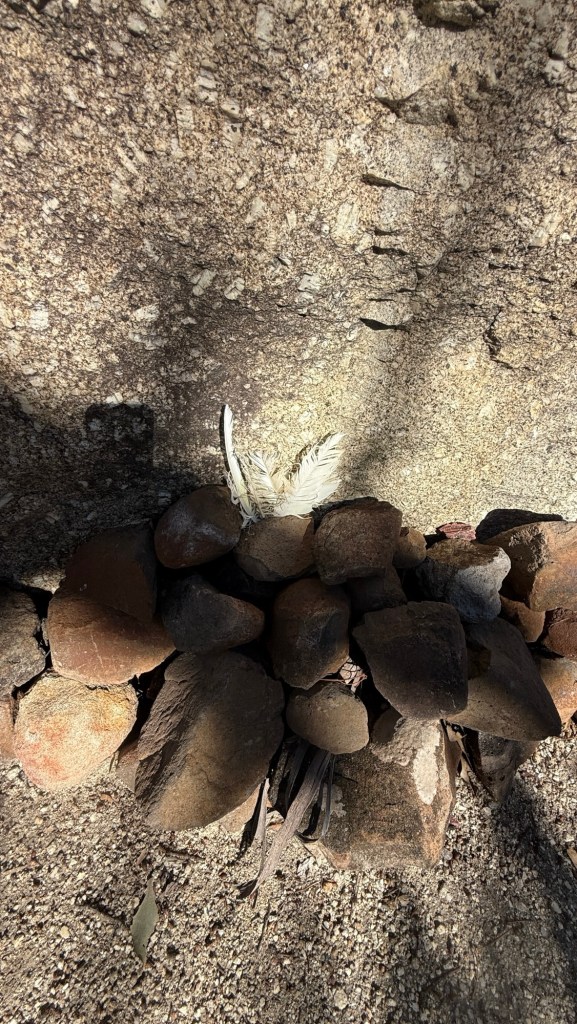
At the base of the monument someone has placed a combination of stones and white feathers. I have no way of knowing what the real message of these carefully arranged stones and feathers may be . In some Aboriginal traditions, feathers can have cultural significance, although the meaning varies greatly between communities.
I like to think that the stones suggest a permanence of memory; the feathers suggest peace , spirit and a hope for reconciliation.
Someone has taken the time to stop, reflect, and leave a small token of respect.
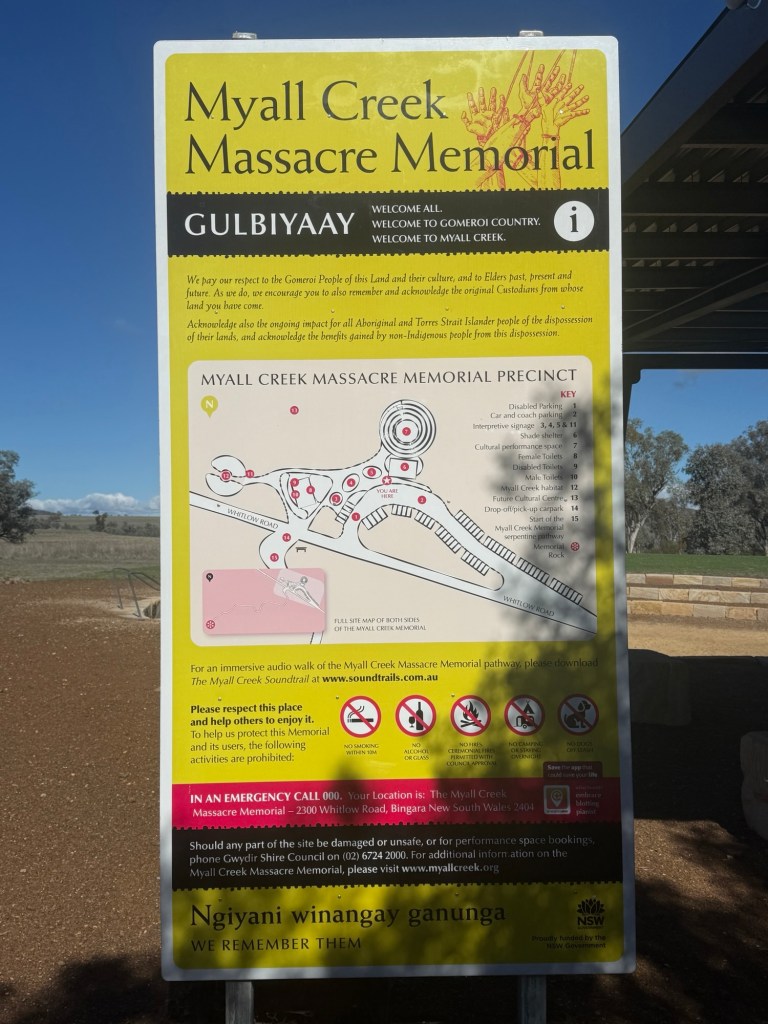
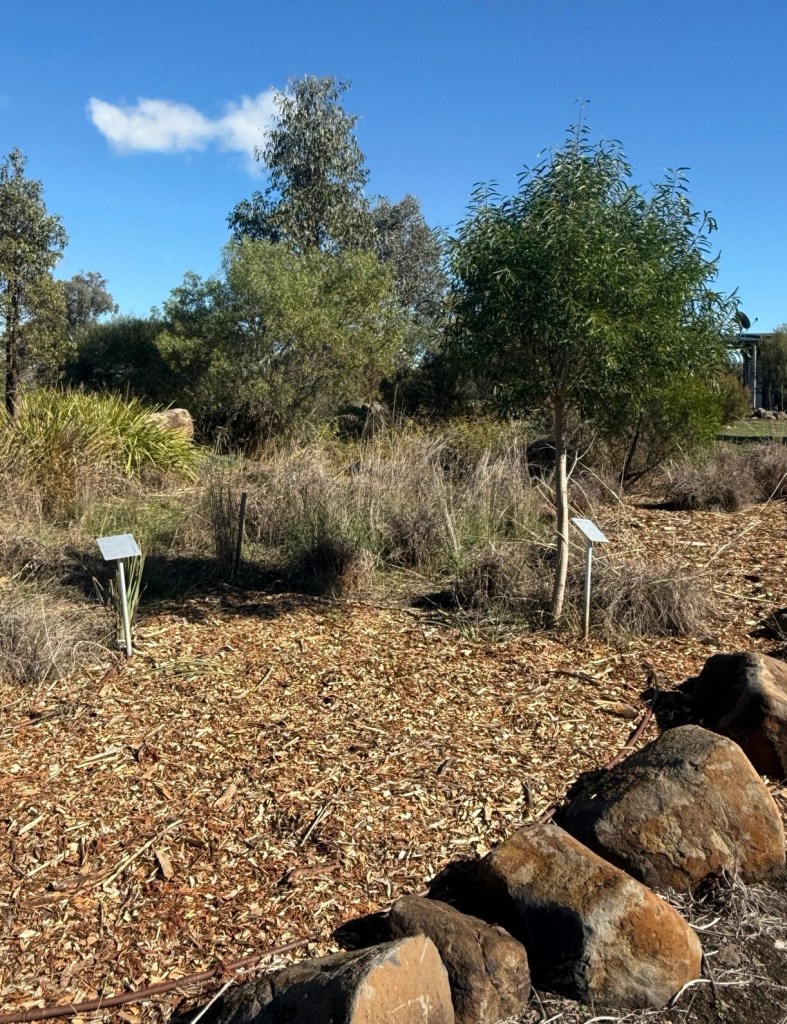
Beyond its historical significance the Myall Creek Memorial offers visitors an opportunity to learn about the natural environment that sustained Aboriginal people for thousands of years before white settlement. Along the walking track you will see many of the native plants that were used for food medicine shelter tools and cultural practices. There are many signs to assist visitors to gain an appreciation of the relationship Aboriginal people had with their land.
 time-2-share